






Sandfly 4.4.0 - Agentless Linux Password Auditing and Data De-Duplication
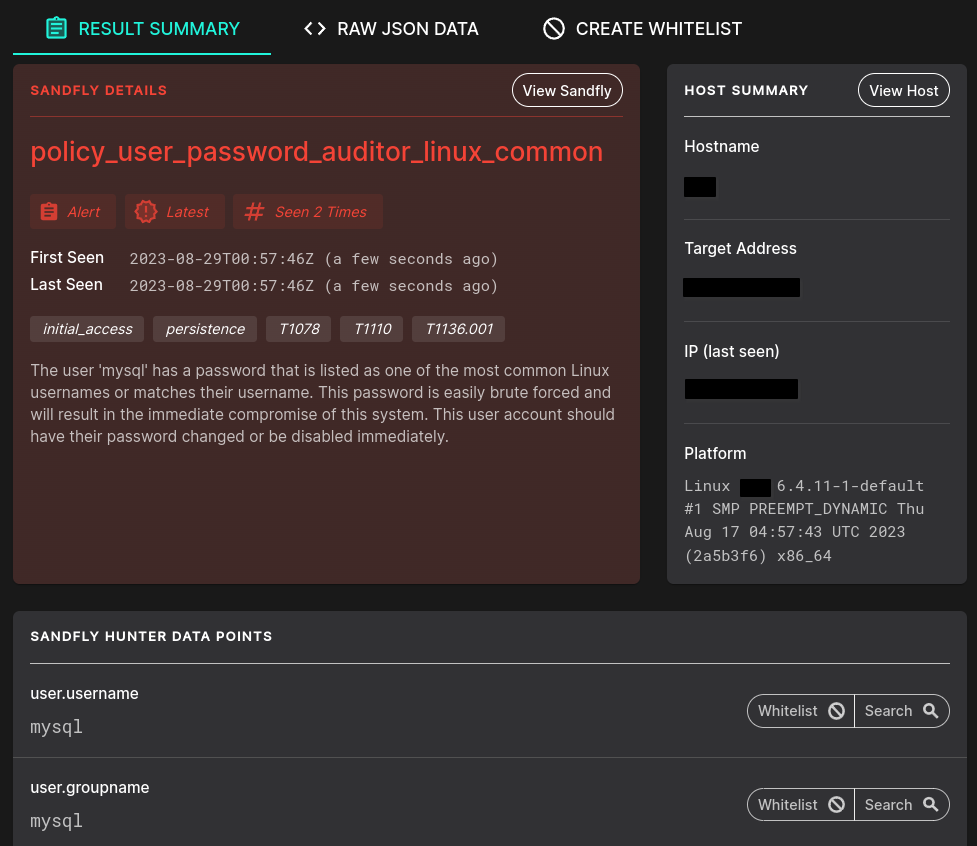
Sandfly 4.4.0 can audit for weak Linux passwords across legacy and modern systems agentlessly.
3 min read
Publication Date: 21 March 2023
Version 4.3.2 of Sandfly incorporates various innovative techniques for identifying Linux kernel taint inconsistencies, which aid in uncovering stealth rootkit activity. Additionally, we have integrated extra modules for auditing unverified and out-of-tree kernel modules and memfd_create file descriptor activities typical of malware. We also have modules to expand our general Linux rootkit detection that are using common kernel hooking libraries.
In addition to this, we have also incorporated SSH host key validation features.
Finally, we have substantially enhanced the database performance of SSH Hunter and overall result processing to handle considerably larger workloads.
The Linux kernel uses the term "taint" to indicate if the active kernel contains unsigned, non-standard (out-of-tree), or other types of modules. Modules causing a tainted kernel can range from harmless, such as proprietary video drivers, to malicious, like Loadable Kernel Module (LKM) rootkits.
Sandfly has introduced multiple techniques for detecting kernel taint, enabling operators to establish policies for reporting on different tainted modes. We now provide modules to identify the following:
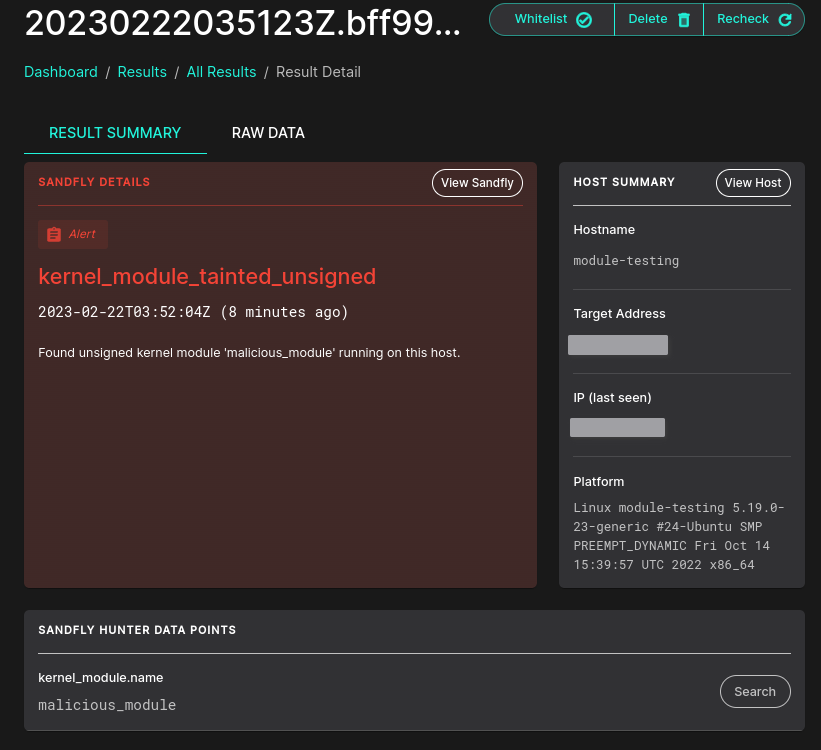
The most frequent module activities that may be deemed suspicious are those marked as unsigned or out-of-tree. These flags indicate that a module has been detected without a valid signature and/or not belonging to the standard kernel build tree. While this can occur occasionally with specific proprietary drivers (e.g., video), it might be considered unusual on a base system and potentially indicative of an active LKM rootkit.
We now offer optional detection for such activities, along with additional customizable detections for identifying any type of tainted flag that has been set.
LKM rootkits typically go to extraordinary lengths to conceal their presence on a host. For example, they might alter commands like lsmod to avoid displaying the rootkit when listing loaded modules.
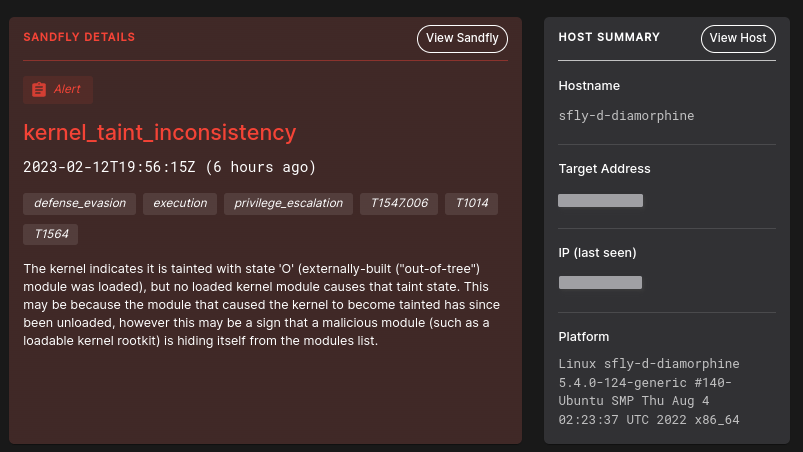
However, these rootkits frequently overlook hiding all evidence of kernel taint on a system. Sandfly now ensures that kernel taint flags correspond with the kernel's stated status. Any inconsistency detected will be flagged for investigation.
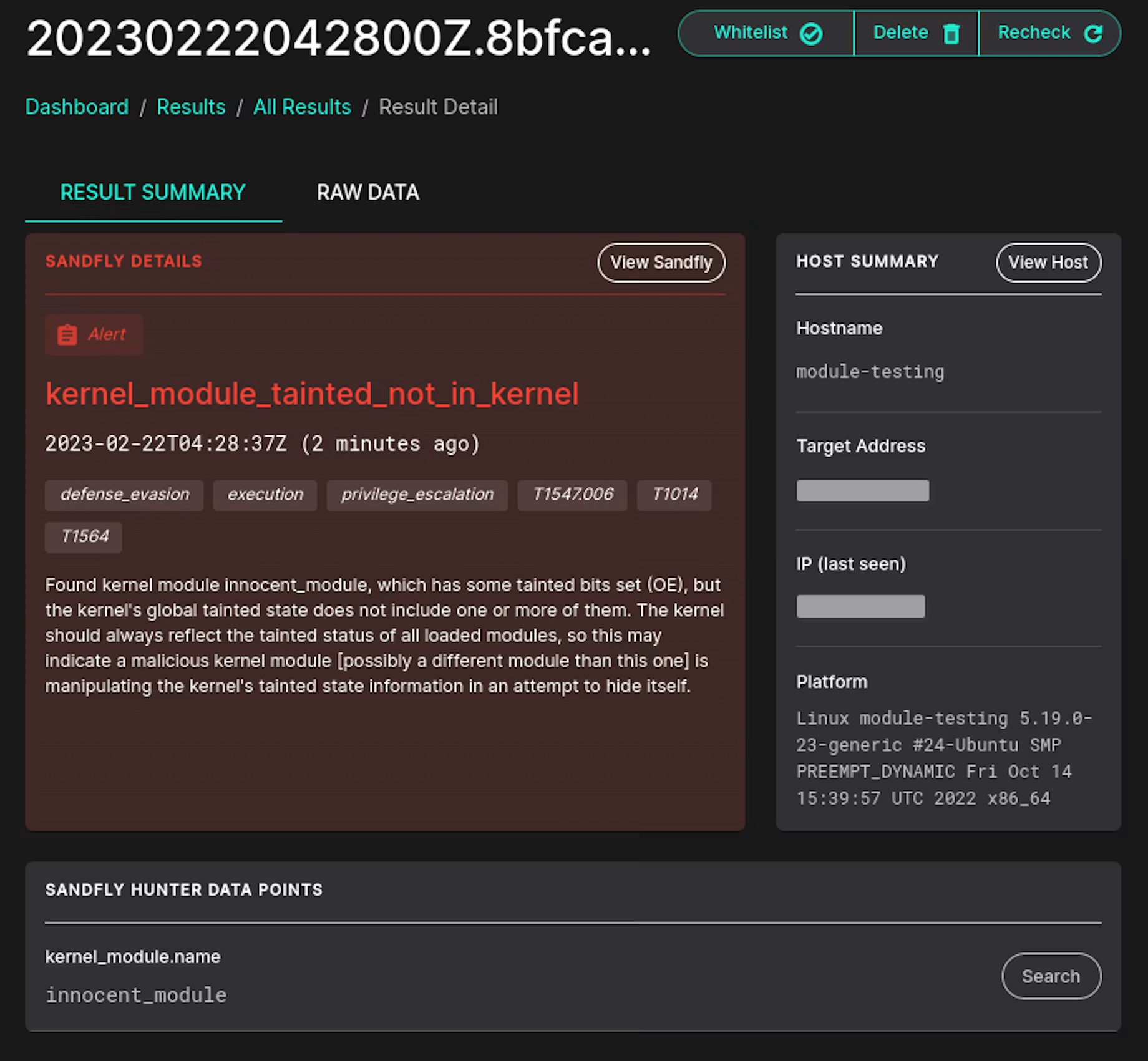
Related to the above, if a kernel module displays taint while the kernel fails to report it accurately, this will also be flagged. Such a situation may arise if a rootkit conceals itself but neglects to hide other tainted modules simultaneously. The discrepancy between the kernel's report and Sandfly's observations suggests that rootkit activity is occurring.
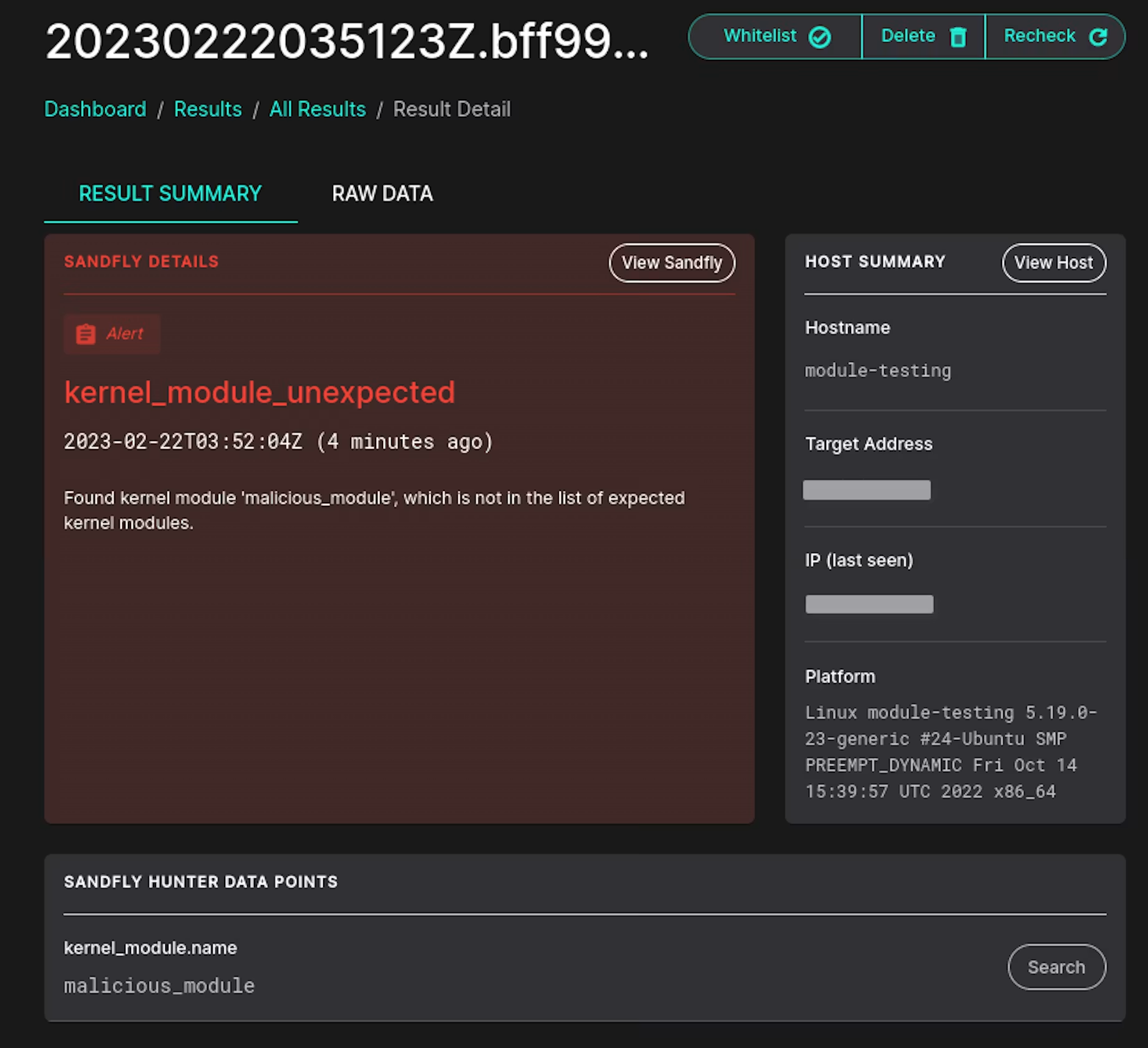
We have added a new policy check where customers can define a list of expected modules across their systems and Sandfly will flag any modules that show up that are not on the list.
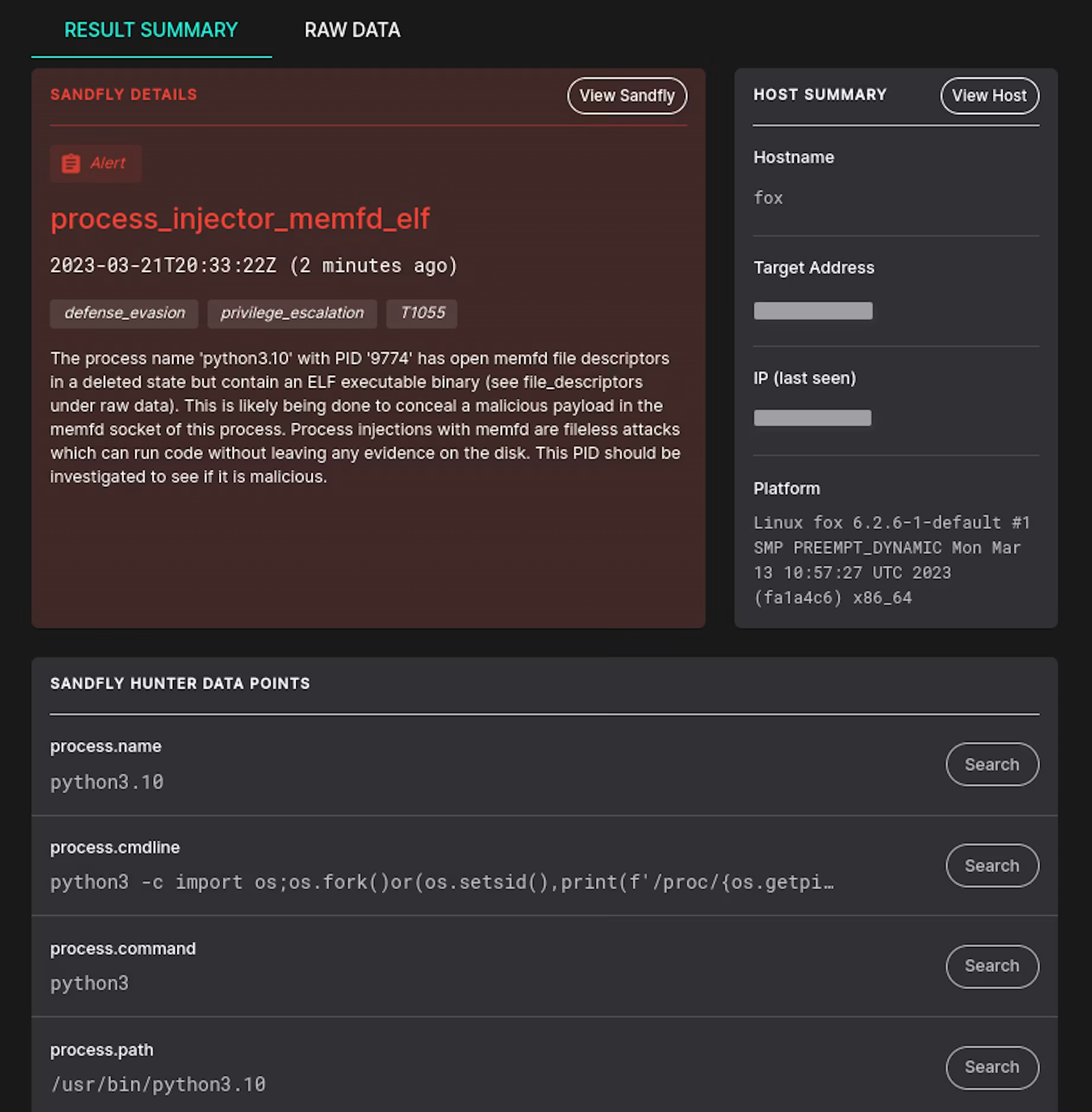
The memfd_create() call can be used for a variety of hiding activities for fileless malware on Linux. We have been able to detect suspicious activity using this tactic for some time, but have enhanced it with specific detection for the file type we see being concealed.
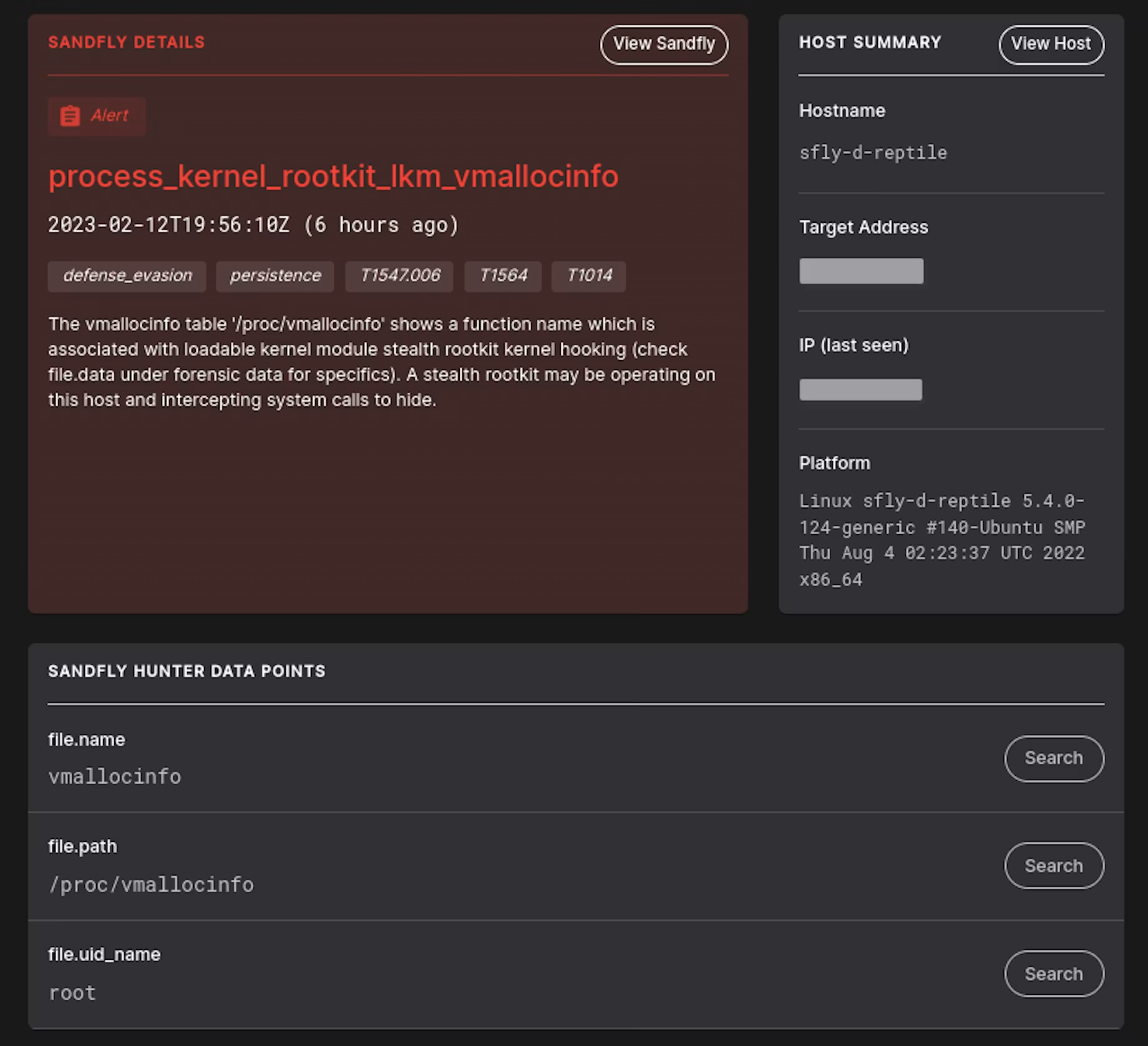
Below we have a detection that has flagged a Linux ELF executable file being hidden in a memfd file descriptor. This kind of activity is extremely suspicious and requires immediate investigation.
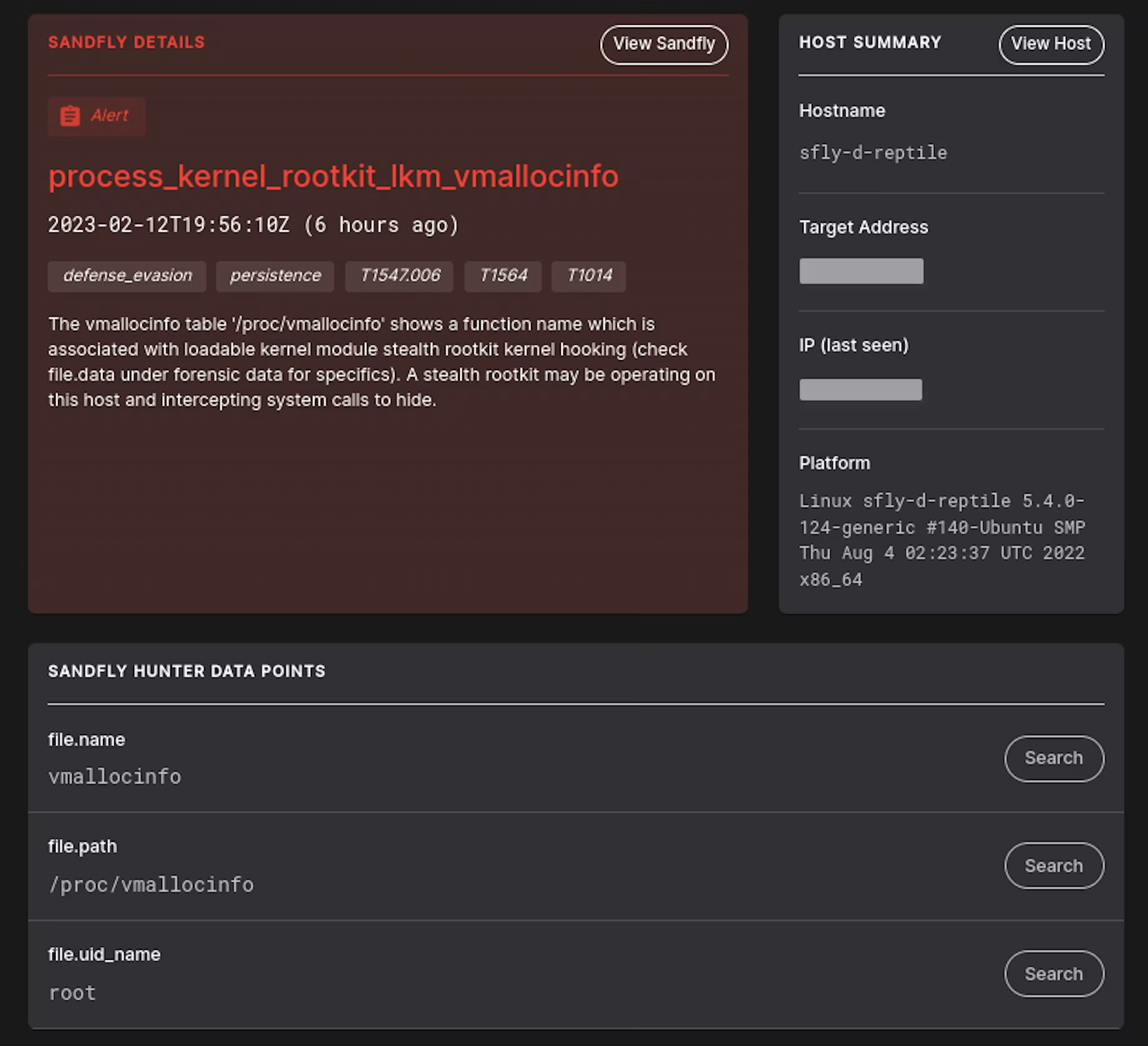
We have improved detection for various Linux stealth rootkits based on the khook library. Systems showing signs of this style of rootkit now have more detection options.
Customers have experienced tremendous success using our SSH Hunter to track and audit SSH keys. We have now implemented significant performance improvements, enabling queries to finish in less than a second, even when tracking tens of thousands of SSH keys.
Besides the speed enhancements for SSH Hunter, we have made substantial advancements in managing result ingestion. The user interface is now more responsive, and the system can accommodate much larger workloads on existing hardware.
You can how tell Sandfly to enforce host key verification when you add a group of hosts or enable/disable on a per host level.
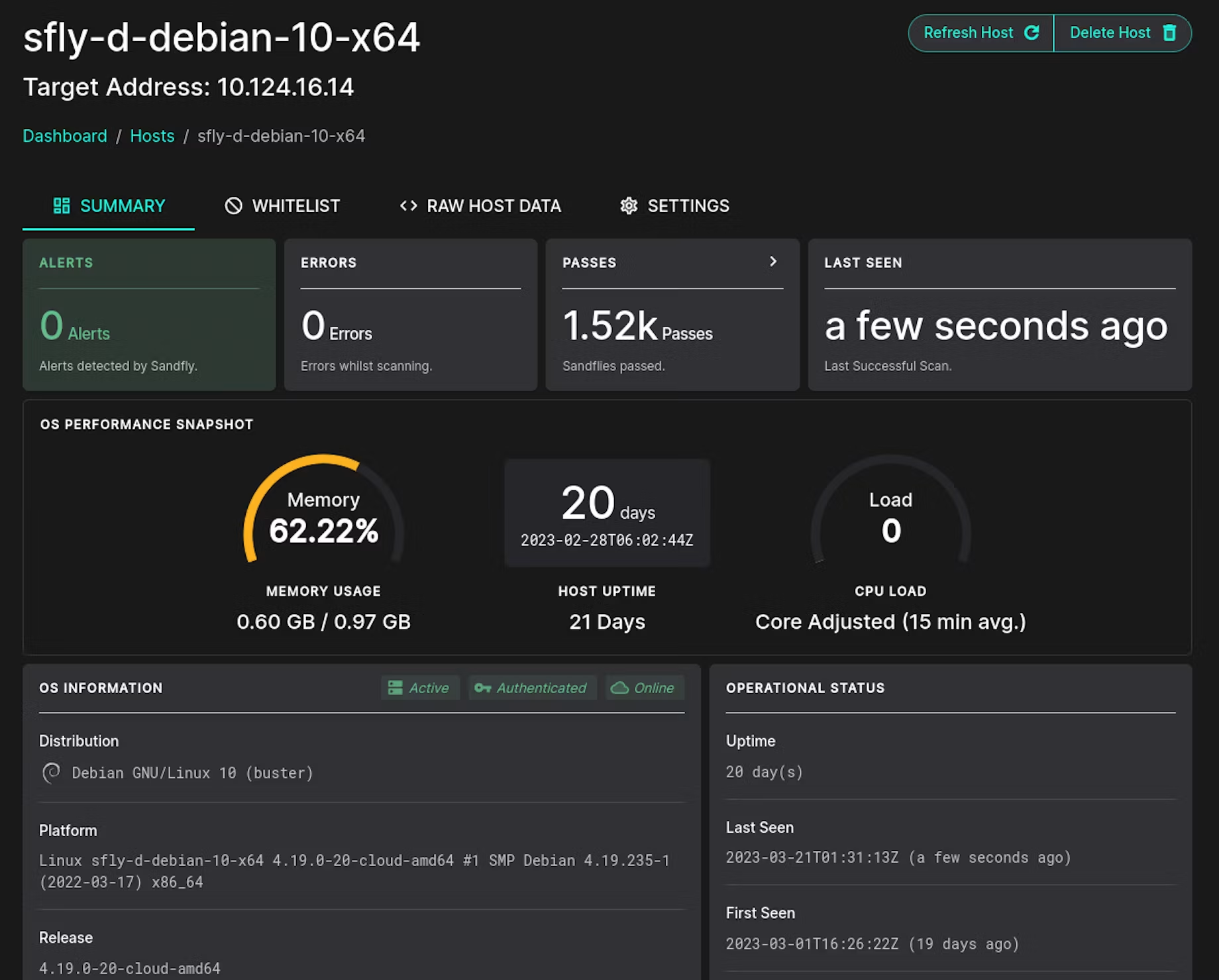
The UI has had many significant enhancements such as the following:
Customers wishing to upgrade can follow the instructions here:
If you have any questions, please reach out to us.
Thank you for using Sandfly.
Sandfly 4.4.0 can audit for weak Linux passwords across legacy and modern systems agentlessly.
Sandfly 4.6.1 adds support for compatibility with Microsoft Active Directory/Entera Single Sign-On (SSO). We also have agentless Linux password...
Sandfly Security's product is not vulnerable to the recent log4j vulnerability.